
What’s The Story, Muthur?
To the point, tabletop gaming
Popular Posts




6 Games that nail What Rules-Lite TTRPGs Should Be
A good rules-lite system doesn’t overwhelm you with procedures and crunch for every situation. Instead, the key procedures are covered and it gives you a clear, concise core mechanic. Then it trusts you to apply it flexibly.

By JimmiWazEre
Opinionated Tabletop Gaming Chap
TL;DR - Rules-lite isn’t the same as rules-incomplete or rules-inconsistent. Don't conflate them.
This post contains affiliate links.
Introduction
I want more people to play Rules-Lite games, but this crusade of mine is hindered by a misconception of what a rules-lite game actually is.
A lot of people hear "rules-lite" and think "lazy" or "half-finished." But that’s missing the point entirely. A great rules-lite RPG isn’t undercooked, it’s efficient, elegant, and focused. Let’s unpack what makes a minimalist system actually good, and why "less" doesn’t mean "worse."
What Is Rules-Lite
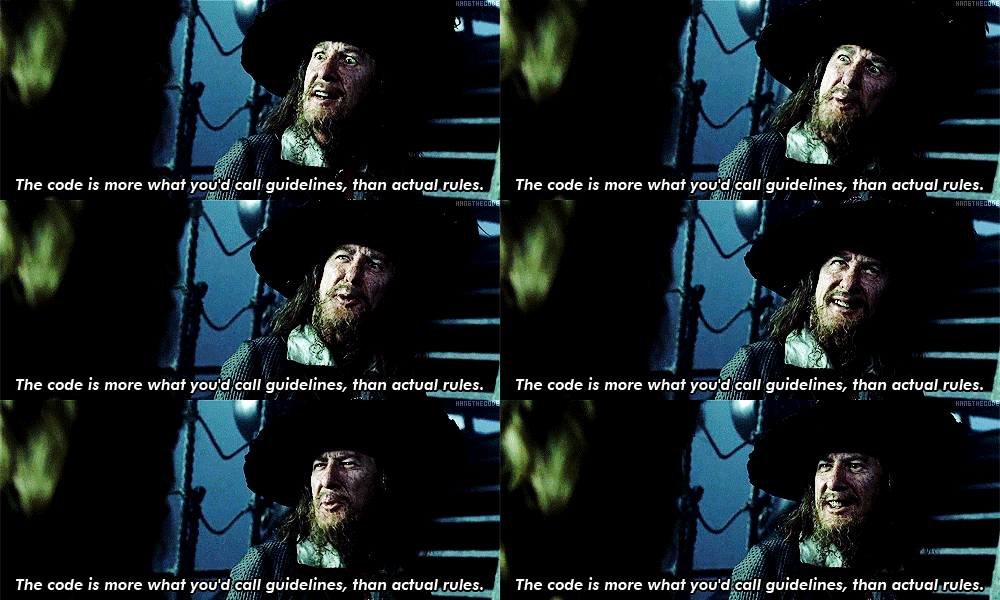
A good rules-lite system doesn’t overwhelm you with procedures and crunch for every situation. Instead, the key procedures are covered and it gives you a clear, concise core mechanic. Then it trusts you to apply it flexibly.
It’s just like that old saying:
Give a GM a fish, and they can run a session. Teach a GM to fish, and they can run a campaign.
Or something like that. I don’t know, it's close enough.
What isn’t Rules-Lite?
Let’s be crystal clear, rules-lite is very different from rules that are simply incomplete or inconsistent.
Inconsistent rules happen when a mechanic is explained more than once but the explanations don’t match. This usually signals a rushed edit. One version may or may not have replaced the other, but both made it to print. That’s not planned ambiguity, rather it comes over as just poor proofreading.
Designers: please, if someone flags this, don't try to convince us that you’re providing options. No one's falling for it, just own it and issue a FAQ or errata.
Incomplete rules are when a mechanic is introduced but not fully defined. For example, a game might explain how to hit an enemy in great detail… but never actually explain how damage works. You can’t convince me that this is minimalist design, it's just frustratingly half baked rules - because now we know that there is a specific way that this should be done, but we’ve no idea what it is.
RAI Matters
It all comes down to understanding the Rules as Intended (RAI). If the designer has said enough to give the GM an understanding of the game’s core rules language, then the GM should be confident that they can make a ruling that falls in line with RAI. If not, flesh it out some more.
Gameplay examples are great for this, as are developer commentaries in the sidebar. Designers take note!
Experience matters
I'm a big fan of the rules-lite philosophy, but if you've never run a TTRPG before, there is a danger that you might not have developed that muscle yet which allows you to make rulings up on the spot that feel consistent with the game system. Just bear that in mind before you pick your first game.
That’s not to say that a rules'-lite game shouldn’t be your first, but rather that I just want to make sure that your expectations are managed. It may start difficult, but it will get easier as you go on.
Recommendations
If you’re interested in picking up a good rules-lite game, then I’ve got a short curated list for you of some of my personal favourites. Full disclosure though my dudes, some of these are affiliate links, and if you chose to pick one up using the links provided, then I’ll get a small kickback at no extra cost to you.
Mausritter
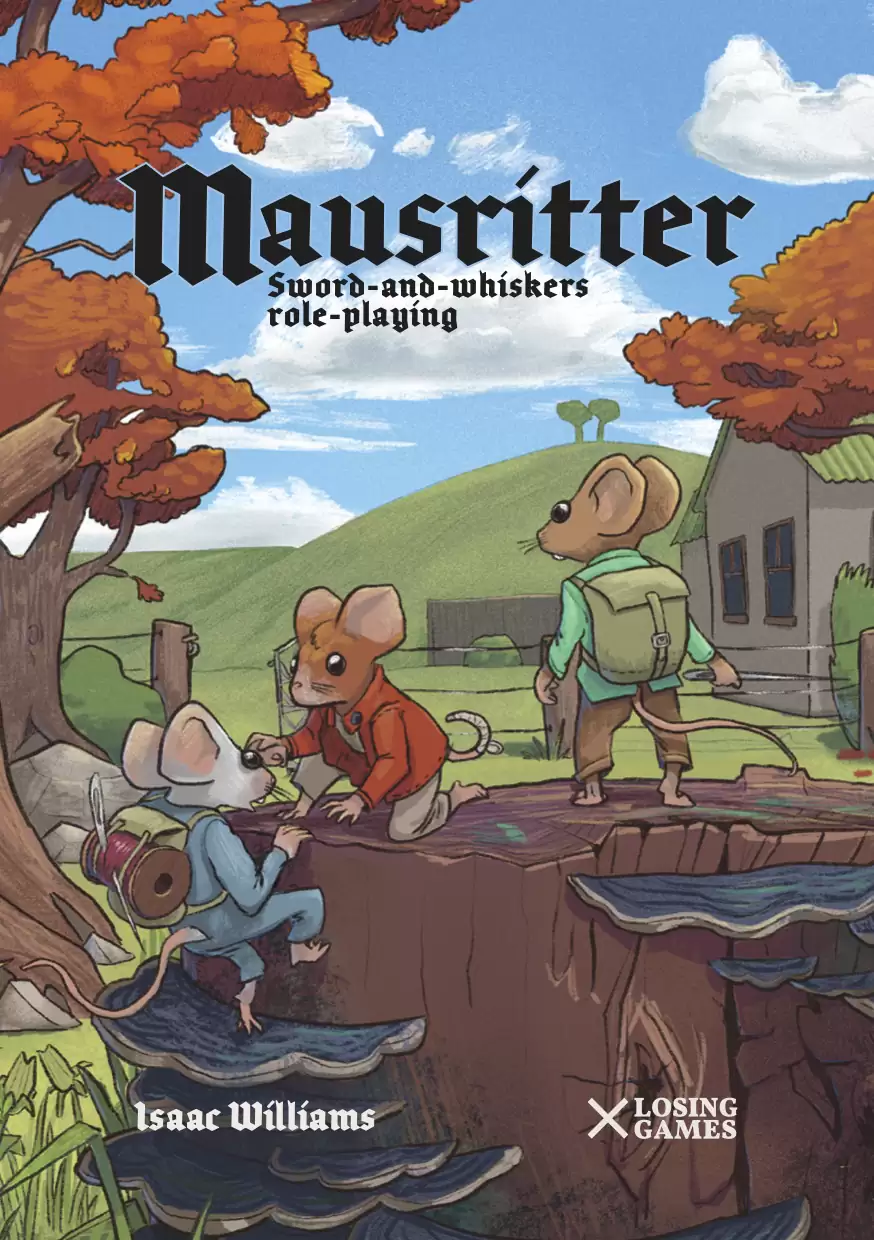
Mausritter is a charming, rules-lite fantasy RPG where players take on the roles of brave little mice in a big, dangerous world. Built on Into The Odd, an OSR style framework, it uses simple d20 roll under mechanics and item slots for inventory, making it quick to learn and run. Its elegance lies in its ability to deliver rich, old-school adventure vibes with modern usability and 1990’s Disney cartoon flair.
I played in a duette game of this with my wife at the kitchen table, and she really enjoyed the vibes. With tweaks to the lethality I can see this being really popular with young families too.
Index Card RPG
ICRPG strips tabletop roleplaying down to its essentials with fast, flexible rules that encourage creative problem-solving and dynamic pacing. Everything runs off a single target number per room or scene, making it intuitive and highly adaptable. Its modular design and DIY ethos make it perfect for GMs who like hacking and building custom worlds on the fly.
EZD6
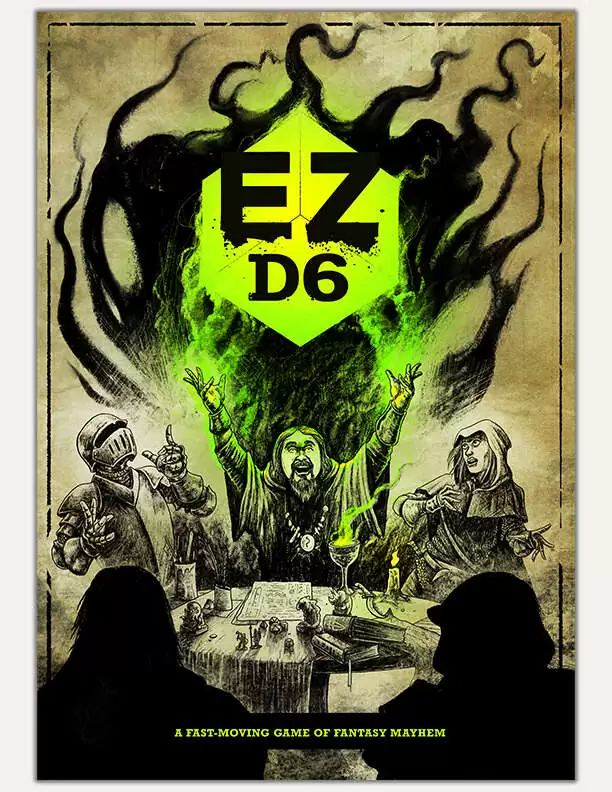
Created by DM Scotty, EZD6 lives up to its name with a system that’s incredibly easy to pick up and play. Most rolls come down to a single d6 against a target number, streamlining gameplay while leaving plenty of room for dramatic moments. It’s especially good for narrative-driven groups who don’t wanted to be limited by predefined abilities on their character sheets, and instead want to freedom to narrate their abilities as they see fit.
One of my players who’d never GM’d before in her life ran a couple of us through a homebrew adventure using this system and it was an absolute blast.
Pirate Borg

Pirate Borg is a brutal, rules-lite game of swashbuckling horror on the high seas. Inspired by Mörk Borg, it mixes fast, deadly mechanics with punk rock layout and evocative setting material. It’s ideal for players who like their pirate adventures with a side of doom, decay, and dark magic, and who don’t mind their characters dying spectacularly.
The squint-and-it’s-historical side of this game has literally made me buy pirate history books and start listening to pirate podcasts. I love all that stuff now, and it takes me back to my childhood - playing Secret of Monkey Island on my big brother’s Amiga. Good times.
GOZR
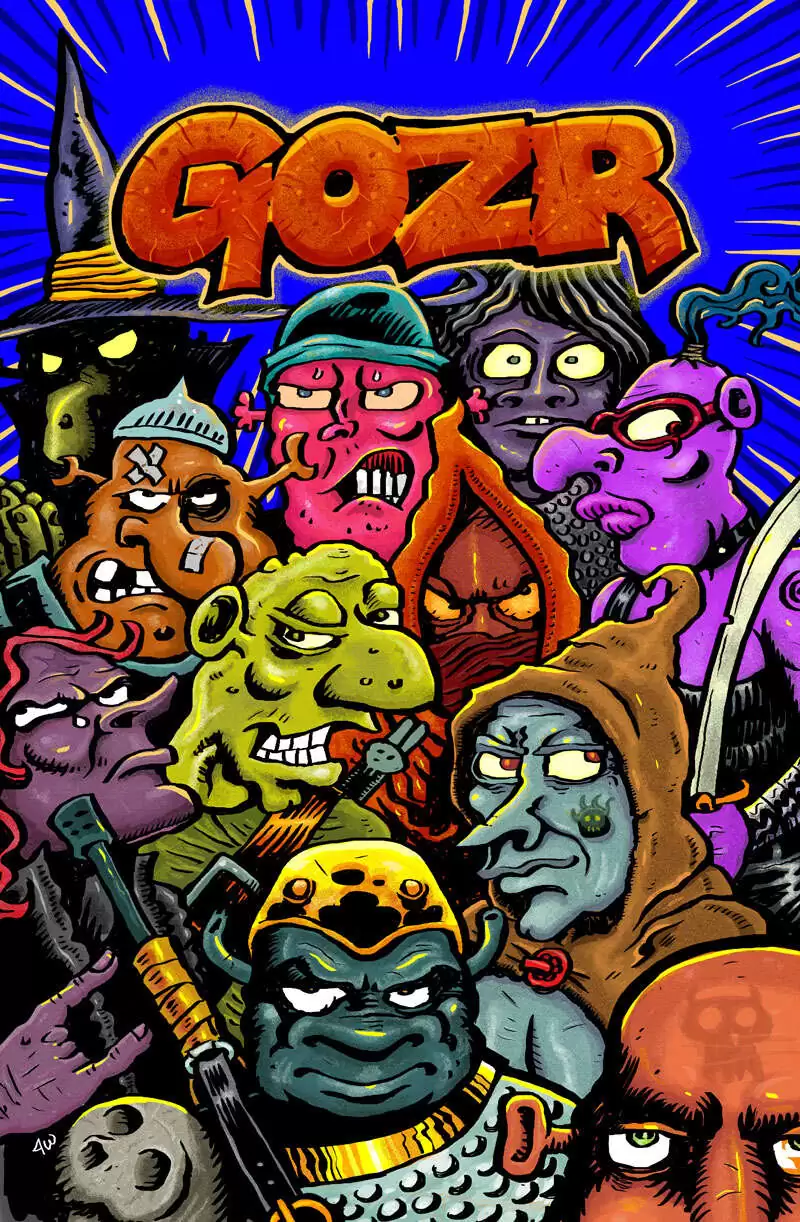
GOZR is a wild, gonzo sci-fantasy RPG that feels like it escaped from the back of an '80s metal album cover. It runs on a straightforward d20 roll-over system and embraces weirdness at every turn, from its mutant characters to its DIY zine-style aesthetic. It's brilliant for groups who want something fresh, funky, and full of chaotic creativity without a ton of prep.
I also wrote an opinion piece for this game a few months ago which included a free system cheat sheet that I’d worked on with the help of the games designer to get players started sooner. Can’t recommend it enough!
Spellz!
Indie developer, Jake Holmes recently reached out to me on Bluesky with an interesting little one page rules-lite game he was working on called SPELLZ! The game is still in it’s beta testing phase and he’s taking feedback on it it, but for the price of totally free, and for the sake of reading less than a single page - it’s definitely worth a look in if you want to see just how lite the rules can go!
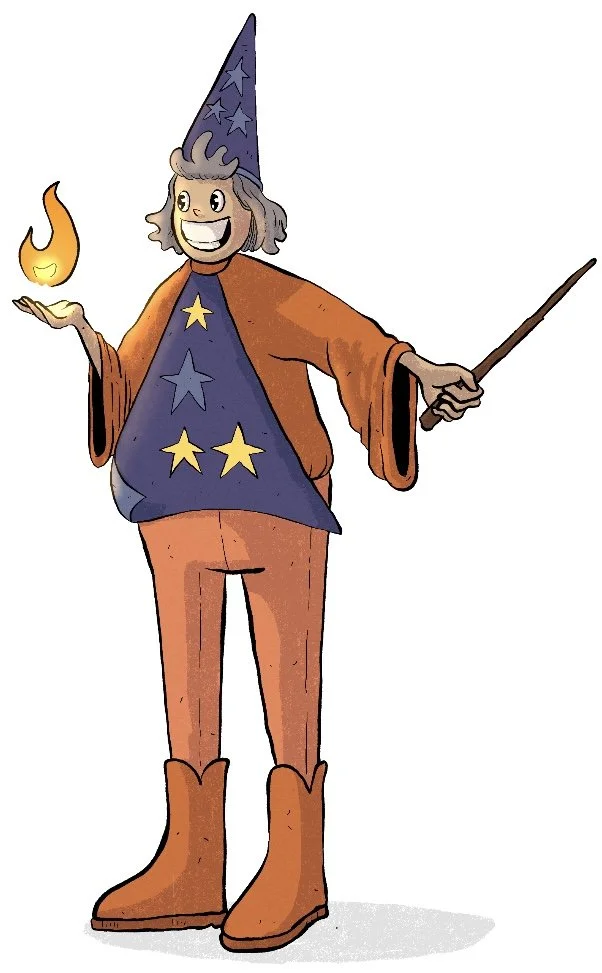
It’s a fast TTRPG where magic is improvised in real time using letter tiles. Players draw tiles and try to form words on the fly — the word they create becomes the spell, and its effect is narrated accordingly. Stronger or stranger words often have bigger effects, and failed spell attempts can backfire spectacularly, with the GM repurposing your discarded letters.
I’ve not played it, but I have given feedback on the rules which was promptly actioned. It looks quick, and perfect for creative groups who enjoy thinking on their feet, might even be a way to introduce TTRPGs to your mum, dad, and nan who’s idea of a tabletop game otherwise begins with crosswords and ends with Scrabble!
Heya, just a thought, if you want me to take a look at your game and feature it on the site, like SPELLZ! Then drop me a message, lets have a chat!
Conclusion
The key message here is that if you've been frustrated by rules-incomplete or rules-inconsistent in the past, please don't be put off a rules-lite system because you're assuming it's the same thing. It ain't. If you get overwhelmed by books the size of a university textbook and you want to start small, rules-lite could be for you.
And so endeth the sermon.
Hey, thanks for reading - you’re good people. If you’ve enjoyed this, it’d be great if you could share it on your socials - it really helps me out and costs you nothing! If you’re super into it and want to make sure you catch more of my content, subscribe to my free monthly Mailer of Many Things newsletter!
This post contains affiliate links.






Chariot of the Gods for Alien RPG: Wot I Think After Running It
Split over three distinct acts, CotG is a one shot, or “cinematic” adventure that took my group about 6-7 hours to finish.
I’m gonna be straight up with you - the key thing that I love about this is module is that after act 1, most of the GM’s hard work is over.
By JimmiWazEre
Opinionated Tabletop Gaming Chap
TL/DR - Love, love, love the system and the adventure, loath the rulebook or module layouts. Had an absolute blast running it and my players enjoyed it too. Made us hungry to play Destroyer of Worlds next.
This post probably contains spoilers. If you’re thinking about GMing this, then please read on, but if you’re a player - you have been warned.
Oh, and this post also contains affiliate links in case you want to pick up the game.
This is Captain Miller, last surviving crew member of the USCSS Montero. Signing off.
Thus ended last Sunday’s 6 hour long adventure; Chariot of the Gods for Alien RPG by Free league.
I want to use this post to share my thoughts about it, and the system in general. I liked it, lots. But it’s not quite as straightforward as that.
A bit of preamble about the 1e Ruleset First
CotG is the starter set adventure, so it seems only fair to assume that most people might be experiencing the core rules for the first time too. Now, built off the Year Zero Engine, I love the core rules of Alien RPG - let me open there, but I do not like the rulebook.
Possibly a good place to start is with the fact that Free league are releasing a new edition* of Alien RPG in September 2025, and they say that they’re doing it to address many of the community issues with the current rulebook.
It’s a smart move because as lovely a ‘thing’ (full of lore and art) that the 1e core rulebook is, and as fundamentally great that the rule system is - the rulebook itself doesn’t appear to have been written with enough effective consideration towards functionality.
*Totally compatible with minimal tweaks required to play it with existing adventures.
How not to Design a rulebook
Let me give you an example. So, on your character sheet, there’s something called “Air”. As GM, you’ll want to know the game mechanics for how Air runs down, and what happens when it runs out. So you’re gonna go to the index and search for “Air” - because if it’s a named stat on the official character sheet, it should be in the index, right?
It’s not there.
You pause, think a moment, and maybe you realise to look under “Consumables” instead, because Air on your sheet is listed under a section titled Consumables. That takes you to page 34. Page 34 mentions that consumables decrease, and for those rules, you’re told to go to page 35.
As for what happens when you run out of air? Page 34 vaguely tells you to “see Chapter 4”.
What, the entire chapter? Or am I now expected to scan through a bunch of pages until I stumble across the answer?
To be fair, the chapter 4 thing is an error with my printed version of the rulebook, it’s actually in chapter 5, but even new revisions don’t tell you that it’s specifically page 110. I scanned through all of chapter 4, and then most of chapter 5 before I found that.
Yes, even reading alone, that was as enjoyable as it sounds.

But all that aside, I’d just had to read hundreds of words presented in long form prose, I’d had to mentally separate the actual rules from the sea of guff about how too much carbon dioxide is dangerous, and not having air is bad for you. That’s exhausting.

As someone familiar with breathing, I don’t need a paragraph telling me that not having air is bad, especially when I’m at the game table. I just want to know how your game handles it mechanically.
How to Design a rulebook
Designers - I love you, you made one of my favourite games, but the rules for air should be searchable by index, on one page, and be concise like this:
Whenever it makes narrative sense (such as after physical exertion), have players roll a number of d6 equal to their current air supply. For every [1] rolled, reduce their air by 1.
Once a player’s air hits 0, they must make a Stamina check every round to stay conscious. Starting from the second round, reduce their dice pool by 1 each time.
If they ever fail a Stamina check, they drop to 0 health and must make a death roll each round until they’re either supplied with air, or they until die from asphyxiation.
Much better. Concise, no waffle, no page flipping. If future editions took this kind of structure to heart, it’d be a huge win.
The Year Zero Engine
I’ve spoken before about the central mechanic before, so I don’t need to repeat that here - but I’m a big fan of the overall elegance of the system. Simple character sheets and flat stats go a long way towards keeping the flow of gameplay going, and Free league have done a really good job with the Year Zero Game Engine here.
I’m also a massive fan of the way Alien RPG avoids GM Conflict of Interest, by having you roll for the monsters actions. After about an hour of building tension, my players were set upon by an Abomination in the hallway. It was a perfect introduction to the terror of the world when the dice gods decided that the Abomination would lunge forward, grip Paige’s character; Davies’ skull and crush it like a swollen pimple.
Life is cheap in Alien, but when you’ve got a healthy backlog of fleshed out NPCs with character sheets, it takes the sting out of character death.
I asked one of my players, Alan, for his perspective after the session:

The system for Alien is fantastic, it has all the details and stats you need but is done in a very concise and simple way that I found very enjoyable, and a massive improvement on the more complex RPG systems out there. At no point was I getting bogged down by stats, or left checking around every inch of my character sheet when the GM asked for a specific roll, and because of this I found I could spend more time getting into the module itself and the role playing parts, giving me a proper chance to get lost in the games world.
For me personally, I struggle with how much crunch games like 5e give you, and whenever we have to pause to check things in manuals it can really cause a funk in the rhythm, there was none of that with this and honestly that’s a massive bonus for me, also you get to roll tons of dice all at once, which is so much fun!!!
Can’t say it fairer than that. Thanks Alan.
My Experience With Chariot of the Gods
Split over three distinct acts, CotG is a one shot, or “cinematic” adventure that took my group about 6-7 hours to finish.
I’m gonna be straight up with you - the key thing that I love about this is module is that after act 1, most of the GM’s hard work is over.
Those first couple of hours you’re setting the scene and ratcheting up the tension. It’s very description heavy, and you’re introducing lots of new events and NPCs.
But then act 2 hits, and the game sort of just starts running itself. You see, all the actors have secret evolving motivations written on cards that you hand out as the game progresses. These motivations often set them at odds against each other, creating situations where the players must compromise, or outright start sabotaging each other.
A good way to think about it is that a GM’s primary role is to toss spanners into the works for players to fix. Indeed, in act 1 you’ll be doing this a good amount. By act 2 however, the players are tossing their own spanners into the works, and at each other, and as GM this frees you up to take much more of a reactive, and backseat roll. It gives you space to breath and scheme, and it means that when you do need to toss a spanner of your own, it can be much more carefully thought out for maximum appropriate impact.
This isn’t an accident - this is the consequence of fantastic adventure writing.
But enough about my thoughts, here’s what Alan had to say:
I found CotG had enough familiarity to what I’ve seen in the movies to make me feel like we were in that world, but with enough originality to it to not make you feel like you’re just playing a run through of what you’ve watched. I also think the game gives enough info that if you were new to the franchise you still wouldn’t feel lost.
My personal favourite part of the game was the objectives you are given with each act that change as the game goes on, often causing conflict between crew members, or in our case a crew member being a secret android that tried to blow us all up! I really couldn’t recommend this enough, really fun, simple to learn and play with plenty of twists to keep you on your toes.
Prep Work
The CotG book is really interestingly laid out. The front of the book essentially provides an overview of the adventure, the seed, and an impression of things to come. The back of the book contains an appendix of the stats for the monsters in the adventure. Nothing out of the ordinary here.
It’s the middle of the book that’s really clever. You see most adventure modules sort of smush area descriptions in together with plot events that happen when you set off certain triggers. Not CtoG.
Here, the book goes over room descriptions one by one, and once that’s done, it goes over the key events (“spanners”) which it leaves up the GM to place as they see fit on a per act basis.
I find this really helpful, because it means that I can get a focused understanding of the key events in the module, all in a concise section of the book, without having to search through two dozen room descriptions to find them.
I have a gripe though
Unfortunately it can’t all be rivers of milk and honey. Similar to the issue of verbosity in the rulebook, CtoG is also needlessly wordy when it comes to room descriptions - which for me at least, pretty much makes running it from the official book impossible.
Check this out:
SCIENCE LAB 1
The lights in this room flicker, and the stench of decay is overwhelming. There is a pile of gnawed bones in the room. The main lab has an enclosed decontamination area on the main examination table—and under the de-con hood is a perfectly preserved metallic urn. A malfunctioning deep cold freezer with a smashed glass door has four more of these urns in it. An ooze has seeped out of them, forming congealed pools on the floor. Strange, black fungal nodes are growing on the urns and in the pools.
BONES: A Medic or Scientist who examines the bones realizes that they are not all human. There are Neomorph and Abomination bones mixed in as well. This room was the nest of an adult Neomorph. If you use the “Hunter and Prey” event, this Neomorph is still around and could attack at any time.
URNS: These, of course, are the Engineer Ampules that contain the black liquid 26 Draconis Strain of Agent A0-3959X.91–15. Ingestion of the pure form of the agent has fatal results (it counts as a Virulence 12 disease). Each urn is a regular item in terms of encumbrance.
FUNGAL NODES: These are in fact Neomorphic Egg Sacs, ready to eject Motes and infect any PC or NPC with exposed orifices of any kind (see page 292 of the core rulebook). A PC examining the room learns that the nodes are underfoot throughout the room, and difficult to avoid. Moving through the room without disturbing the egg sacs requires a MOBILITY roll.
KEY CARD: Sitting half-submerged in a pool of black goo on the floor is the emergency key card access to the MU/TH/UR mainframe room on the Cronus—dropped here by Ava during a scuffle with the Neomorphs. The key card is a Tiny item.

It’s not even the longest room description, and it’s still far too much to expect a GM to read this all at the table. If you read my piece on making good adventure prep notes, you’ll know what work I had to do next in order to turn this mini essay into usable notes at the game table. If not, well, go check that out right now - it’s totally game changing (props to Annie from DIY & Dragons for the method).
Conclusion
Despite my issues with verbosity and layout choices (How dare you make me read, book!), I absolutely love this system and adventure. If you have players that can get on board with a horror setting, and especially if they like the idea of covertly working against each other - then Chariot of the Gods by Free league gets a good ol’ Fonzy thumbs up from me. If you want to pick it up, please use one of my Affiliate links provided (Chariot of the Gods) and I’ll get a small kick back at no extra cost to you!
Have you played Alien RPG yet? Tell me about your experiences in the comment below - I’d love to hear your thoughts.
Hey, thanks for reading - you’re good people. If you’ve enjoyed this, it’d be great if you could share it on your socials - it really helps me out and costs you nothing! If you’re super into it and want to make sure you catch more of my content, subscribe to my free monthly Mailer of Many Things newsletter!

Either way, catch you laters, alligators.
This post contains affiliate links.

I've been using Encounter Timer for a few months, I have thoughts
A few months back I made an Android app called 'Encounter Timer'. It was the first app I've ever made and I mainly built it for myself and a couple of GM mates, however I turned out so happy with it that I decided to make it available to my subscribers for free.
Now, Domain of Many Things had only been going a few weeks when I first released the app, so readership was very low, and I think we’re long overdue an article revisiting Encounter Timer.
By JimmiWazEre
Opinionated Tabletop Gaming Chap
A few months back I made an Android app called 'Encounter Timer'. It was the first app I've ever made and I was so chuffed with it that I decided to make it available to my subscribers for free.
You're welcome mum!
Since then, I've been using it in play at every opportunity in sessions of Mothership, GOZR, and D&D. So much that the Metal Gear Solid style "!" alert sound the app plays has become something of a meme in my games now.
Now, Domain of Many Things was very much still a baby blog when I first released the app. Readership was very low, so I think we’re long overdue an article revisiting Encounter Timer.
You can read all the details, including operational instructions here. However, if you just want the basic gist: It’s a countdown timer that starts at a random number within a range (default: 5–15 minutes). Once it hits zero, that’s your cue to roll on your encounter table.
No more remembering dungeon turns. Just tap, forget, and play.
Encounter Timer Demonstration
What I like About It
The Core functionality just works
The whole reason Encounter Timer exists is because I suck at remembering dungeon turns. Years of 5e's free-flowing narrative left me untrained in structured time tracking outside of combat.
So, having a simple countdown that automates this? Absolutely perfect.
Helpful usability features
In the real world, as a GM, you're going to want to adjust the timer in response to events at the table.
Encounter Timer has you covered there too, as you’re able to easily reduce the remaining timer by a chunk simply by tapping the countdown after the PCs have done something to draw attention to themselves.
It’s a nifty bit of useful functionality even if I say so myself.
There’s also a “High Danger” toggle which halves the countdown, letting you quickly increase encounter frequency for tense environments.
What I think it's missing
More Encounter Details, Faster
As cool as it is, unfortunately it remains a bit of a badger to have to manually do reaction, specific monster, and distance rolls. Encounter Timer could easily streamline the process further by making these further random rolls for you. The only thing I want to leave out of hardcoding into the app is the specific thing you’re encountering, so perhaps in that case Encounter Timer could use return a d6 value for me to quickly cross check against my own prewritten table.
Support for Systems with Motion Tracker style Mechanics (AlienRPG)
I also quite like the idea of using this timer in games of AlienRpg, however, in that system the PCs often have a motion tracker, which tells them the distance and direction of any threat at whatever point in the game that they decide to use it.

By rules as written, the GM is supposed to be moving their NPCs around the area on a map hidden from the PCs, so the idea of a motion tracker can easily be resolved by the GM consulting their hidden map and relaying the results back to the PCs.
But how would this work with no hidden map, relying instead upon Encounter Timer driven NPCs?
Well, here’s a fact for you: The exact, specific location of the NPCs, whilst it is not known to the PC’s, is totally unimportant. If we can accept that, then it removes the need to be running NPCs around on a hidden map for a start. But it does underline the problem we have with motion trackers, because I hate GM Conflict of Interest, and I don’t want the responsibility to have to decide the details of every encounter using GM fiat.
So, what if, when the encounter timer is running, it also presents the following information to the GM: The direction of the current location of the encounter, and the abstract distance of the location of the current encounter. For example, we might have the following information on screen prior to the alert sounding:
67 seconds (counting down - existing Encounter Timer functionality)
North West (randomly determined, stays static)
Near (Near, Medium, Far - This should update dynamically as the clock runs down past certain milestones)
As GM, what we should infer from this is that the encounter will trigger in just over a minute, the cause of the encounter is currently NW of the PCs position, and right now, it’s in the next area in that direction.
So assuming they’d whipped out their motion tracker and had all that information fed back to them - what would the players want to do with that?
Avoid the Encounter by going in the opposite direction
If they go in a different direction then we could delay the encounter - In terms of app functionality this means we need to be able to add time to it rather than simply remove it.
Avoid the encounter by hiding
If the PCs chose to hide, as GM we can cancel the timer and skip forward in time to the point where the encounter is in the same room as them and then make our checks to see if they’re discovered or not. If not, the encounter moves on and we can reset the timer to start counting down again.
Prepare an Ambush
Similar to hiding above - except the result of failing to detect the presence of the PCs will result in the PCs getting the drop on the NPC.
Cunning Shenanigans, like venting the airlock in the room to the NW
Assuming the PCs are able to do this prior to the encounter timer ticking down far enough to change the abstract distance, then I’d simply cancel the timer and the encounter has been resolved.
Conclusion
After months of real-world use, I’m still thrilled with Encounter Timer. It works exactly as intended, and I’ve got ideas to push it even further, especially for sci-fi TTRPGs.
Have I missed anything? Got an idea you’d love to see added? Drop it in the comments.
Hey, thanks for reading - you’re good people. If you’ve enjoyed this, it’d be great if you could share it on your socials, and maybe think about subscribing to the Mailer of Many Things! Either way, catch you later.
*This article contains affiliate links

I don’t know what to Run Next. I’ve got options. What do you Think?
My 5e Lost Mines of Phandelver campaign looks like it’s going to be drawing to a close in the next couple of months, I’ll have a write up of my thoughts on that module as and when.
But this has got me onto thinking about what to run next.
By JimmiWazEre
Opinionated Tabletop Gaming Chap
S’up?! - My 5e Lost Mines of Phandelver campaign looks like it’s going to be drawing to a close in the next couple of months, I’ll have a write up of my thoughts on that module as and when.
But this has got me onto thinking about what to run next. Deffo not D&D 5e, I’ve quite had my fill of that system for the time being thankyou!
So, I’ve narrowed it down to two campaign choices - which do you think I should go with?
Campaign Ideas
Shadowdark - Dungeons of Drakkenheim
I came across the Dungeon Dudes’ actual play series a few years ago, and I must confess that I found myself quite getting into it. I liked the grim dark setting and the player driven story style of the adventure - it has a very ‘Mordheim’ vibe about it which tickles my pickle.
The premise is that the city of Drakkenheim has been struck by a magical meteor and now lays in ruin. The residual magic has a mutating effect on the local fauna, creating new beasts and monsters of a Lovecraftian persuasion. However, ‘Delerium’ - the name given to the magical fragments of meteor left about the place, commands a high value in the market, and so there’s no shortage of intrepid adventurers and factions lining up to go a plundering the city ruins.


To cap it off, there’s a power struggle because the royal line has apparently been severed during the incident, with differing factions wanting to install new kings, or hunt down the existing royal family somewhere in the city. Lots of political intrigue to be getting on with.
So it sounds pretty cool, and when they released a campaign book for it (Dungeons of Drakkenheim), I figured it’d be rude not to pick it up!
Sadly, it’s designed for 5e, however now that I’ve got Shadowdark (which is built off 5e, but stripped of all it’s heavy baggage) and the recently completed Shadowdark Monster Conversion kit, I’m thinking that it probably wouldn’t be too difficult to convert the adventure over. Especially since the city of Drakkenheim is sort of a megadungeon, and Shadowdark seemingly seems to be a perfect match.
Mausritter - The Estate
I think I was introduced to Mausritter by Ben Milton over at Questing Beast a few years ago, and I was immediately charmed by it. So I picked up copies of both the core rules and “The Estate” which is a hex crawl sandbox adventure, featuring a dozen or so premade adventures for the different keyed location of the hex map.

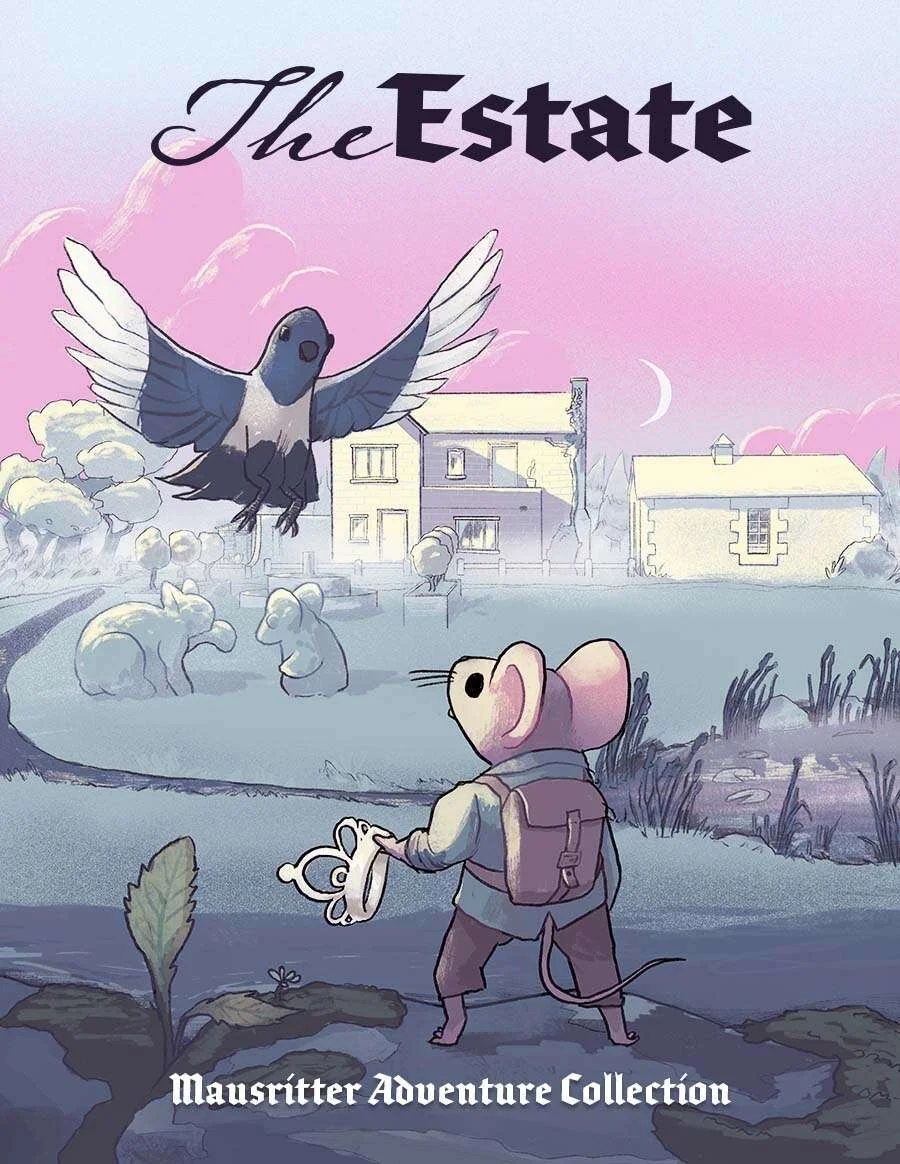
The premise is that it’s the familiar D&D trope, except that you’re a mouse, and the world is full of mafioso cats, snakes, owls, rats, and other predatorial critters which essentially puts you at the bottom of the food chain. “The Estate” is a full hex crawl adventure that literally takes place in the property and grounds of a human’s stately home, some some adventures take place in the green house, others in the drainage system or chimney.
It’s built off the rules lite “Into the Odd” system, and aside from the low power level of the player characters, it’s main distinguishing features are that it is classless - your abilities are dictated by your current inventory. Also, you do not roll to hit, all hits are automatically successful, both ways, and it it’s just a question of how much damage.
It’s one of those games that’s been sat on my shelf for a while, having only played it the once with my Wife in a duette, so it’s definitely due it’s time in the sun.
I like it’s inventory system so much that I named it one of my favourite TTRPG mechanics, and built my own D&D house rule off the back of it!
Conclusion
Which gets your vote? Reach out in the comments below and let me know!
Hey, thanks for reading - you’re good people. If you’ve enjoyed reading this, it’d be great if you could share it on your socials, and maybe think about subscribing to the Mailer of Many Things! Either way, catch you later.

I Took the Temperature of r/RPG on Reddit - I Found a Fever!
Hey there, I’ve been dabbling on Reddit quite a bit lately, mainly as a vehicle for syndicating my blog posts (since organic Google searching is literally the pits), and I’ve noticed that they’re quite the opinionated bunch.
By JimmiWazEre
Opinionated Tabletop Gaming Person
Hey there, I’ve been dabbling on Reddit quite a bit lately, mainly as a vehicle for syndicating my blog posts (since organic Google searching is literally the pits), and I’ve noticed that they’re quite the opinionated bunch.
So I figured that it might be fun and informative to go to r/RPG, the largest TTRPG community and ask them for their ‘hot takes’, so that I could write an article about the ones that stood out to me.
Reddit did not disappoint.
Before I start sharing these takes, I want to make it very clear that they’re not my own words, or any in many cases, not even my shared opinions. I will be offering a commentary against each one so you can see what I actually think, but since this is The Internet, just bear all this in mind before you get the pitchforks out if you read something inflammatory!
Trigger warning - May Contain Spicy Opinions!
Seriously, this post is literally analysing the hot takes of people on Reddit. If you don’t want to be exposed to that, please head over to my homepage and read a different article. Last warning!
OK, you ready for some fun? Just so you know, this isn’t a dogpile, or doxing exercise so I’ll not be showing the author’s screen names or linking to the original post. I will however be [beep]ing out any naughty words, but otherwise I’ll be reposting their comments as is, typos and all. Alrighty, without further ado - enjoy!
Hot Take 1) Indie Games Should be Released with Adventures

If a game doesn't have any modules, be that created by the author/s or by the community, then it doesn't matter whether or not it contains "everything you need to run the game“ because I won't know how it is intended to be run and I don't have spare table time to [beep] around trying to work it out.
Modules are the first thing I check for, even if I don't intend to use them, because if there aren't any that's a red flag. If the author can't (or can't be bothered to) write an example adventure for their game then I'm not going to waste time trying to work out how I should run it, I'll just find something else.
Gosh, internet people are so angry! I think there’s two points here to unpack. Firstly - the value of an ecosystem of adventures for your indie game system. The poster is quite right to point out that having included or at least available adventures communicates the games tone and sets out a very literal example of how the game author expects their game to be played. When this is missing, it does indeed create a barrier to entry.
Indie developers take note.
Second point though, I know it’s a hot take, but the language of this post comes across so badly as to almost undermine the good point being made. Indie game makers are often working solo for months or years on passion projects to create things that they heartbreakingly and realistically expect to be ignored by the community at large. This displays an incredible and admirable dedication to their craft and fans. To suggest that either they’re lazy, or have some kind of a servile obligation to create your vision, rather than their own is fairly problematic to say the least.
I’m going to go on and assume that this poster is actually a really nice guy, and maybe he’s just having a really crappy day. You should do the same.
Hot Take 2) Modern D&D Play Style Expectations Are Bad

character backstory should be short
balance is overrated, unbalanced gameplay or abilities inspire cool moments in a story
stats are unnecessary, a sword+1 is boring. The items should always be something cool like a sword that extends into a whip
D&D (and a lot alike) is just a tactical board game in a roleplay costume
I recognise a lot of typical OSR sentiment here.
Short backstories encourage ‘playing to find out’ and unconstrained improvised roleplay at the table, conversely, long back stories tend to create a GM Conflict of Interest - that desire to ensure that the character who has this lovingly crafted novel about how he is the chosen one, isn’t killed in the first encounters with goblins because of their poor tactical choices!
Magic items that don’t simply provide a stat boost is a similar ideal - they prompt creative improvised gameplay.
Ooh that’s naughty! “D&D is just a tactical boardgame in a roleplay costume”! I mean, I kinda, sorta, almost agree. Let’s say I can see where the poster is coming from. 5e’s ruleset is predominantly concerned with tactical combat and the intricacies of how abilities work, with enough detail to supposedly maintain consistency and balance. The other pillars; social and exploration, do not get much more than a cursory nod in comparison.
Hot Take 3) 5e is a Better Computer Game than TTRPG

5e is not a good TTRPG. It is, however, a wonderful computer game.
Baldur's Gate proves this decisively.
I’m showing my own ‘Rulings over Rules’ philosophy here but this one get’s my total agreement. Baldurs Gate 3 remains one of my favourite computer games, and despite being modded for the conversion (no more so than any GM’s standard house rules though) 5e just has too much focus on resolving conflict by players picking ready made special abilities from a menu (aka character sheet), just like you would with a video game.
Hot Take 4) RNG is Still RNG No Matter How You Achieve It

The specific "dice system" a TTRPG uses is meaningless.
My time playing war games and board games has opened my eyes to the fact that every RNG based mechanic can run on pure D6s just fine.
I don’t quite agree with this one. From a mathematical perspective, different dice have different odds of getting any given number, which means that the bigger the dice, the more granular you outcomes can be. Some games thrive on that granularity.
Additionally, for some reason I can’t quite explain, rolling dice is fun! So different ways to roll dice means different and varied ways to have that fun.
Hot Take 5) GM Experience is Nothing like the Player Experience

HOT: balance should be 'by player', not by character
DAMN HOT:Backstory is your first five levels
NUCLEAR:The GM and the players aren't playing the same game
Some more OSR sensibilities here again I suspect. I’ve written quite extensively about game balance before, though I’m not sure what this poster means by “by player, not by character”, unless he means that he balances his players at the table by their skill at playing TTRPGs?
Backstories, yeah this is similar to the one on Hot Take number 2 - play to find out.
“The GM and the players aren’t playing the same game” - Now this IS interesting. I think this is fairly on point to be honest, The experiences of being a GM versus being a player are pretty irreconcilable. Other than potentially sharing the same room and sitting at the same table, each group is wholly focused on different things. I suppose a good analogy might be the experiences of orchestral violinists as opposed to conductors.
Conclusion
I found that quite an interesting foray into the psyche of r/RPG, and I am quite surprised that D&D 5e gets so little love in such a large community! I’d like to thank everybody that responded to my call out for hot takes, and I hope you’ve enjoyed reading about them. Let me know your thoughts in the comments below! Special thanks to peb on itch.io for sharing his character portraits on cc 4.0!
Hey, thanks for reading - you’re good people. If you’ve enjoyed reading this, it’d be great if you could share it on your socials, and maybe think about subscribing to the Mailer of Many Things for monthly updates from DMT straight to your inbox! Either way, catch you later.
A core dice roll is a bundle of variables that shape how a game feels, how players assess risk, and how much work the GM has to do. This post breaks down the five big factors inside the dice loop: who sets the target, what shape the randomness takes, how odds get modified, how outcomes are interpreted, and when you should actually roll in the first place. Each of these choices changes tension, pacing, tone, and player responsibility.